
The Superhero League 2
Lion StudiosPuzzle
4.64.32K Reviews
- Version
- 1.44
- Installs
- 10.00M
- Age Rating
- Teen
Screenshots
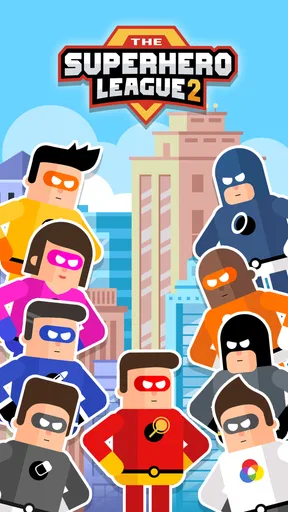
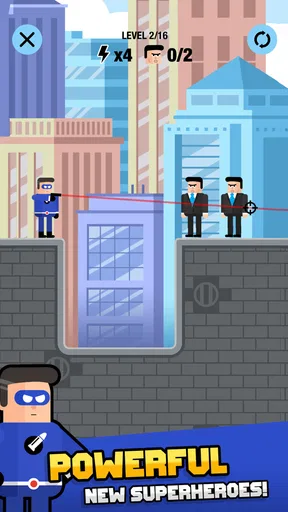
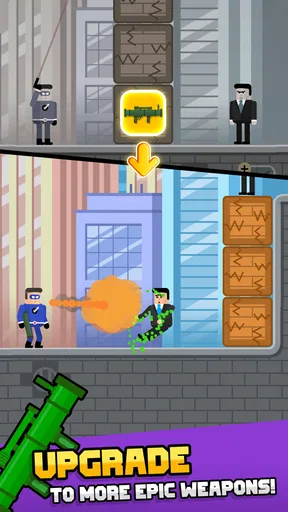
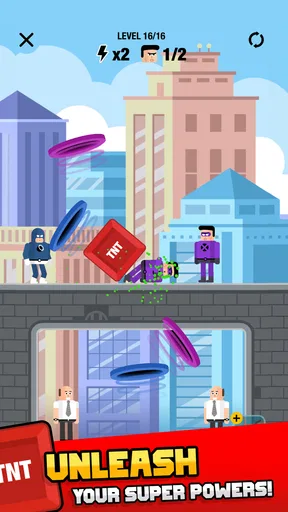
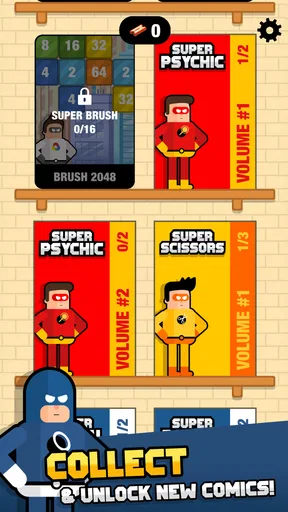
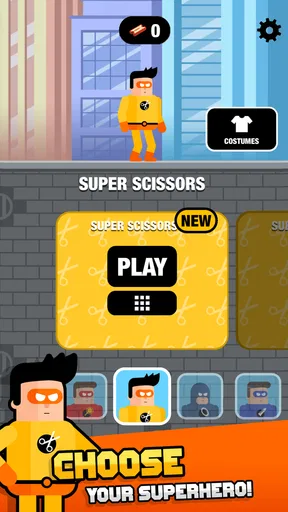
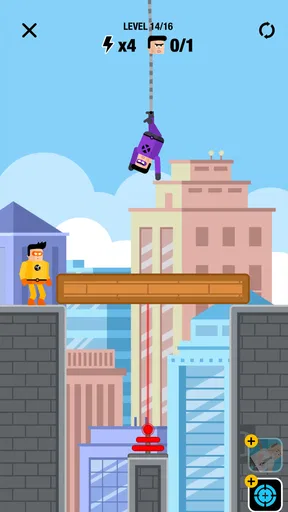
Our Review of The Superhero League 2
 Analysis by Appyee
I spent time with The Superhero League 2 as a casual puzzle game, and my first impression was that it aims for quick, playful problem-solving rather than a long, story-heavy adventure. It comes from Lion Studios, is free to download, and sits in the Teen category. That combination makes it easy to try, but the real question is whether its superhero theme gives the familiar puzzle format enough personality to keep you returning.
The short answer is yes, with some qualifications. I found it most enjoyable in small sessions, especially when I wanted something more interactive than scrolling but less demanding than a full action game. It is not the best choice if you want deep character development, a competitive puzzle ladder, or a completely uninterrupted experience. Its appeal is narrower and more practical: quick challenges, a light superhero setting, and the satisfaction of working out what the game expects from you.
How the game feels in everyday play
The game is a follow-up to The Superhero League, so its identity is built around continuing that puzzle-focused superhero concept rather than presenting itself as a conventional comic-book combat game. I approached it expecting short levels and simple rules that could become trickier through arrangement, timing, and careful observation. That expectation shaped my experience: the fun comes less from mastering a complicated control system and more from noticing the intended solution.
That makes it a natural fit for brief breaks. I could imagine opening it while waiting for an appointment, taking a few turns during a commute, or playing after dinner without needing to remember a complicated plot. The Teen rating is worth keeping in mind for families, though: it should not automatically be treated as a children’s game simply because the presentation is colorful and comic-inspired.
The game is free to access, which lowers the risk of trying it. The store information also lists in-app purchases ranging from $0.99 to $5.99 per item. I see that as an important distinction: downloading it costs nothing, but the overall value depends on how comfortable you are with optional spending and any interruptions that may appear during play. I would begin without buying anything and judge the experience on that basis.
Lion Studios has chosen a format that is easy to understand from the first few minutes. You do not need to learn a large collection of menus or study a long tutorial before making progress. That accessibility is one of its strengths, but it also means experienced puzzle players may recognize the basic rhythm quickly. The game has to keep presenting fresh situations for the experience to remain interesting.
The puzzle loop rewards observation more than speed
My favorite part of this style of game is the moment when a level first looks chaotic, then suddenly becomes readable. Instead of rushing, I found it better to pause and inspect the positions of characters, obstacles, and possible interactions. In a superhero puzzle, the visual theme can tempt you to think in terms of attack first, but the better approach is often to ask what the level is quietly directing you to notice.
A useful habit is to test the smallest possible action before committing to a larger sequence. If a move fails, I treat that attempt as information rather than immediately repeating it. This is especially helpful in compact puzzle levels, where one misplaced action can make the rest of the solution impossible. The game is more satisfying when I think of each attempt as a quick experiment.
Another practical tip is to avoid playing while distracted. These games look casual, but a missed visual clue can make a straightforward challenge feel unfair. When I gave the screen my full attention for a minute or two, I usually made better progress than when I tapped impatiently. That makes the title well suited to short, focused breaks, but less suitable as background entertainment while watching another show.
The strongest value is in the problem-solving moment, not in the amount of content you can rush through. Players who enjoy finding the intended trick will get more from it than players who only want constant action. That difference matters when deciding whether a free download is worth keeping installed.
Where the superhero theme helps
The superhero setting gives the puzzles a clearer personality than an abstract collection of logic boards. Even when the underlying activity is simple, the presentation encourages me to frame each challenge as a small rescue, confrontation, or tactical situation. That framing adds motivation, particularly during the early part of the game when the mechanics are still familiarizing themselves.
It also makes the game approachable for people who do not normally seek out traditional puzzle apps. Someone who might skip a plain tile or number puzzle may be more willing to try a game built around heroes and villains. In that sense, the theme acts as an invitation. It does not replace good puzzle design, but it makes the first step easier.
The trade-off is that players expecting a full superhero game may feel misled by their own expectations. This is not the place I would go for elaborate battles, extensive customization, or a large narrative campaign. The superhero idea is primarily a wrapper for the challenges. If you want a story to carry you from one chapter to the next, a dedicated adventure game will probably offer more depth.
What the free price means in practice
Because the game is free, I think of the initial download as a trial rather than a purchase decision. You can see whether the puzzle style suits you before spending anything. That is a meaningful advantage for a casual title, especially when many similar games compete for attention.
At the same time, free access does not automatically mean unlimited value. The listed purchase range of $0.99 to $5.99 per item means that optional spending is part of the product’s structure. I would not buy anything simply to solve a level more quickly. First, I would check whether the challenge becomes enjoyable again after a short break, because the satisfaction of solving it myself is the main reason to play.
For me, the best approach is to treat purchases as unnecessary until the game has already proved that it belongs in my regular rotation. If I only open it once every few weeks, paying for extras would not make sense. If I consistently enjoy its puzzles and want convenience, a small purchase may feel reasonable, but that is a personal value judgment rather than something the game guarantees.
This also answers a common concern about whether it is safe to recommend to someone who wants a completely free experience. I would recommend trying it for free, but I would not promise a purchase-free experience without qualification. Anyone who is sensitive to prompts, interruptions, or accidental spending should review the device’s purchase controls and make a deliberate choice before playing.
Small-session use cases and practical habits
One realistic way I would use it is during a ten-minute waiting period. I can start a puzzle, focus on the visual layout, and stop once I reach a natural break without needing to remember a complicated storyline. That is more convenient than a large role-playing game, where a short interruption can leave me unsure about what I was doing.
It also works as a change of pace after more demanding games. When I do not want reflex-based combat or a long competitive match, a puzzle built around a superhero scenario gives me something active to think about without requiring the same intensity. The important thing is to play it as a focused mini-session, not to expect it to replace a larger game.
A less obvious benefit is that failed attempts can help reveal how the level is designed. I recommend trying to identify the exact point where a plan went wrong instead of restarting immediately. Did the first move block a later route? Did the order matter? Was the apparent target actually a distraction? Asking those questions turns a frustrating attempt into a useful clue and makes the game feel more strategic.
I would also avoid judging the whole experience from one difficult puzzle. Puzzle games often have uneven pacing: a few quick wins may be followed by a level that demands more patience. If I were recommending it to a friend, I would suggest playing several short sessions before deciding whether the increasing challenge feels rewarding or repetitive.
Trade-offs that affect long-term value
The biggest limitation is that the basic appeal can become familiar. Once I understand the visual language of a particular puzzle, I may solve similar situations by pattern recognition rather than discovery. That is not a flaw in every level, but it affects how long the game stays fresh for me. Players who need constant novelty may move on sooner than players who enjoy a steady stream of compact challenges.
There is also a difference between being stuck because a puzzle is clever and being stuck because the intended interaction is not obvious. In the first case, I feel encouraged to keep testing ideas. In the second, I feel that I am searching for the developer’s interpretation rather than solving a problem naturally. The game is at its best when the answer becomes clear in hindsight; it is weaker when the solution feels arbitrary.
Another trade-off is the relationship between free access and convenience. A player who refuses all optional purchases may need more patience than someone willing to spend. I would not assume that paying automatically improves the core puzzles, because the purchases are listed as individual items rather than described as a complete premium edition. For a person who wants one upfront payment and no further decisions, a paid puzzle game may be a cleaner alternative.
Compared with a classic logic app, this title offers more atmosphere and a stronger theme, but likely less purity. A traditional puzzle app may be better if you want to focus only on rules, patterns, or numbers. Compared with an action superhero game, this one is calmer and more accessible, but it does not provide the same sense of movement or combat mastery. Its position between those two groups is exactly what makes it appealing to some players and easy to dismiss for others.
Who is likely to get the most from it?
I think it is a good match for casual players who enjoy visual puzzles, comic-book presentation, and short sessions. It is also suitable for someone who wants to test a game without paying at the start. The broad adoption shown by its rating and install figures suggests that the concept has reached a substantial audience, while the average score of 4.6 indicates that many players respond positively to the experience.
Those figures are useful context, but they should not replace personal testing. A high average cannot tell me whether the puzzle pacing matches my preferences, and a large audience does not guarantee that I will enjoy the same parts. I would use the free entry point to make that decision rather than relying only on popularity.
I would be more cautious about recommending it to someone who wants a deep campaign, detailed superhero lore, or a competitive system that rewards long-term mastery. I would also suggest skipping it if interruptions are a deal-breaker or if you dislike games that include optional purchases. In those cases, a fully paid puzzle title or an offline-focused alternative may provide a better fit, even if it has a less colorful theme.
For younger players, I would follow the Teen rating rather than assuming the cartoon style makes it universally appropriate. Adults choosing games for a family device should look at the rating and supervise spending settings as they would with any free-to-download game. That is a simple step, but it prevents the price label from creating a false sense that there is no financial decision involved.
Device expectations and version context
The game supports devices running Android 7.0 or later, which makes it accessible to many older Android users. That is helpful if you are not using a recent phone and do not want to upgrade hardware just to try a casual puzzle game. Still, compatibility does not tell me how every device will perform, so I would keep expectations sensible on older hardware.
The current version is 1.44, and the game was released on October 20, 2023. I mention those details because they help place the app in context: this is an established follow-up rather than a brand-new experiment. If you are comparing it with the original, the sequel’s main attraction is the chance to continue with the same broad superhero-puzzle identity rather than begin with an unrelated concept.
I would keep the app updated through the normal store process, particularly if a puzzle behaves unexpectedly or the interface changes. I would not choose it solely because it has a newer version number, though. Updates matter for maintenance, but the deciding factor remains whether the core challenges are enjoyable during ordinary play.
My recommendation after weighing the value
After considering the free entry point, the superhero presentation, and the puzzle-first design, I would recommend giving it a try to anyone who wants a light game for short, attentive sessions. The lack of an upfront price makes that recommendation easy. You can discover quickly whether the visual clues and level rhythm suit you without committing money first.
I would not describe it as an automatic recommendation for every superhero fan. If what you really want is combat, exploration, or a substantial story, the theme may not be enough to satisfy you. Likewise, puzzle experts looking for intricate systems may find the experience too straightforward once they learn its patterns. The right audience is someone who values accessible challenges more than complexity for its own sake.
My buying advice is simple: start free, play patiently, and do not purchase an item until you know exactly what value it adds to your own routine. Since individual in-app purchases are listed between $0.99 and $5.99, the sensible test is whether the free experience already earns regular play time. If it does not, spending more is unlikely to fix the underlying mismatch.
In the end, The Superhero League 2 succeeds as a themed, pick-up-and-play puzzle game with a clear audience. I like it most when I treat each level as a small visual riddle and give myself enough attention to notice the intended solution. I would skip it in favor of a premium puzzle game if I wanted a cleaner purchase model, or choose an action title if I wanted the superhero fantasy to be the main event. For everyone between those extremes, the free download is a reasonable invitation, and the game earns its place by making a few minutes of problem-solving feel pleasantly purposeful.
Verdict
Strengths of The Superhero League 2
- Quick levels make it easy to enjoy during short breaks.
- Creative superhero abilities add variety to each puzzle.
- Bright cartoon visuals are appealing and easy to follow.
- Simple controls make the game accessible for most players.
- New challenges gradually introduce more strategic thinking.
Limitations of The Superhero League 2
- Some puzzles can feel repetitive after extended play sessions.
- Progress may slow when levels require very specific solutions.
- Frequent ads can interrupt the flow between completed levels.
- Later stages may rely more on trial and error than skill.
- The game may become less rewarding for players seeking deep combat.
Other Releases by Lion Studios
View All
Death Incoming!
Adventure4.5

The Real Juggle: Soccer 2026
Sports3.0

Popsicle Stack
Arcade4.4

Hooked Inc: Fishing Games
Simulation4.6
Similar Picks in This Category
View All
Block Blast!
HungryStudio4.8

Braindom: Brain Games Test
Lahana Game Studio4.6

AMAZE!
CrazyLabs LTD4.6

Sudoku - Classic Sudoku Puzzle
Oakever Games4.7

Art Puzzle - Puzzle Games
Easybrain4.8

Amaze GO!
Oakever Games4.9
Frequently Asked Questions
What is The Superhero League 2?
The Superhero League 2 is a casual puzzle game that combines superhero abilities with physics-based challenges. Each level asks you to defeat enemies, avoid traps, or interact with objects by choosing the right action. The gameplay is designed for short sessions, making it suitable for players who want a simple experience that can be enjoyed without a complicated tutorial or extensive controls.
How do you play The Superhero League 2?
The game is mainly controlled through taps, swipes, or other simple touch gestures, depending on the level and the hero’s ability. You must study the environment, identify hazards, and use powers at the correct moment. Timing is important, because attacking too early or interacting with the wrong object can cause a failed attempt. Later stages generally require more careful planning.
Is The Superhero League 2 free to download and play?
The Superhero League 2 can generally be downloaded for free on supported mobile devices, but the free version may include advertising and optional in-app purchases. These purchases can provide advantages such as extra resources, cosmetic items, or ways to continue after a failed level. Before downloading, it is worth checking the current store listing because pricing, advertisements, and available purchase options may change.
Does The Superhero League 2 require an internet connection?
Many of the game’s basic puzzle levels may be playable without a constant internet connection, which is convenient when traveling or using limited mobile data. However, some features, advertisements, rewards, updates, or purchases may require connectivity. Offline availability can also vary between versions and devices, so players should not assume that every mode or bonus will work without an internet connection.
Is The Superhero League 2 suitable for children?
The Superhero League 2 uses colorful cartoon-style superhero action rather than realistic violence, making it generally accessible to a broad audience. Nevertheless, parents should review the game’s age rating, advertising content, and in-app purchase settings before allowing younger children to play. Because the game may encourage repeated attempts or optional purchases, parental controls can help prevent accidental spending and manage screen time.
Play our best games!


